

Can groundwater systems be resilient to droughts?
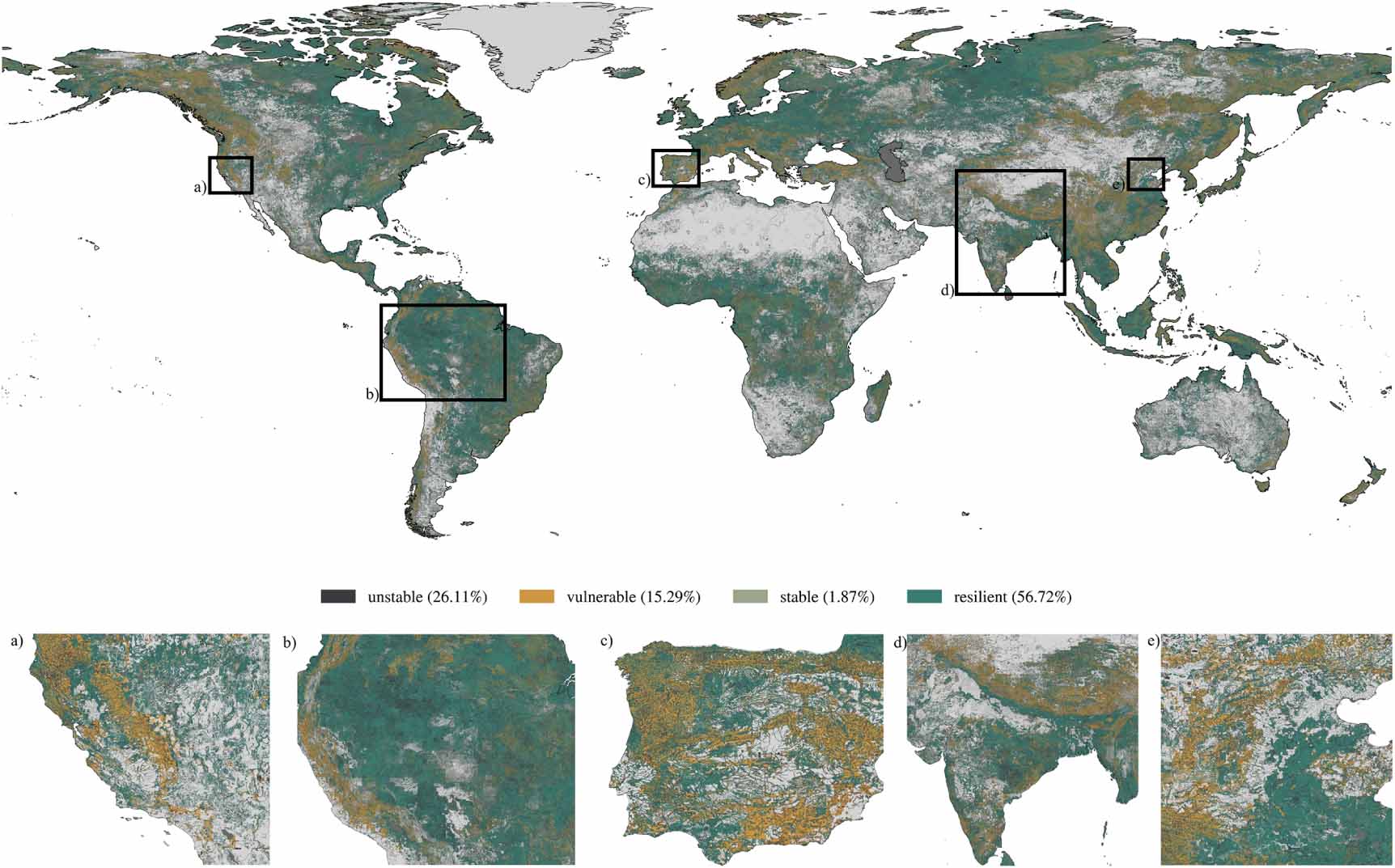
A few days of rain does not change the low groundwater levels after a long drought. To better determine how groundwater systems recover after a drought and which groundwater reserves are most vulnerable, hydrologist Sandra Hauswirth developed a method to classify groundwater systems based on their ability to recover from long drought. With a very high resolution global groundwater model (1 kilometer) it was possible to determine and analyse how a groundwater system responds during a drought and how quickly it can recover. This provides policymakers with the means to better respond to or prevent sever groundwater problems in the future.
Hauswirth investigated the various factors that make the groundwater recover or not after a period of drought by looking at a large range of groundwater drought events around the globe. Climate plays a major role, but at the local level the geology and landscape are additional important factors for drought recovery. Looking at these different drivers, she was able to make a classification in groundwater systems. It turned out that the majority of locations has resilient groundwater systems (57%), exhibiting rapid and robust recovery following droughts. Vulnerable (15%) and stable locations are shaped by geophysical constraints and heightened climate variability, whereas unstable regions (26%) are characterised by frequent, successive drought events leading to a reduced drought recovery capacity and strong impacts on the groundwater system.
Identification of regions at risk
This study provides the first global study of groundwater drought recovery based on high-resolution simulations of a global groundwater model that was developed at Utrecht University. Her research shows that regional climatic, geophysical and anthropogenic aspects play a key role in sustainable groundwater management practices. It can support the identification of regions at risk of crossing critical thresholds and support the development of targeted strategies to enhance global groundwater resilience. Regions and countries already known for their excessive groundwater use, for example for irrigation purposes, and declining groundwater trends (such as California, Spain, India or the Northern China Plain) more often show a complex mix of recovery regimes. These regions often are characterised by many vulnerable and unstable groundwater systems, as a result of groundwater abstraction, compared to more less affected regions.
Changes over time
The current analysis mainly focused on spatial patterns of groundwater recovery. Follow-up research by Hauswirth and her colleagues will also provide more insight into how these recovery processes change over time, looking not just at the past but also into the future under a changing climate.